
Why obstacle courses need to be included in early childhood planning
My son Hugh used to love playing with blocks, puzzles, and sedentary table top activities when he was in kindergarten. However, Hugh often avoided climbing frames, swings, slides, and balancing across rocks or balance beams because he lacked confidence in his motor skills.
This is why I am passionate about inspiring educators and teachers to include indoor and outdoor obstacle courses as part of their daily routines, transitions, and play space design.
Access our printable obstacle course guides and movement resources here to support your planning.
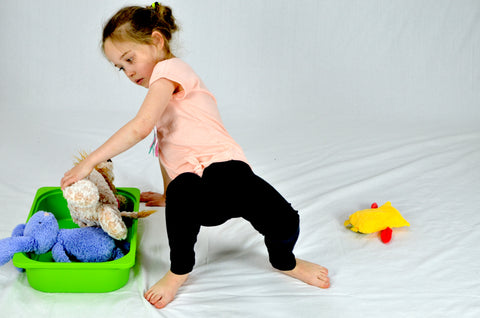
Obstacle courses are vital for children's learning and development, as they provide a wide range of benefits for the whole child.
Obstacle courses promote:
- Physical activity: This is essential for physical development and long term health.
- Gross motor skill development: Children can develop their balance, coordination, core strength, head movement, and shoulder stabilisation.
- Problem solving and decision making: As they navigate through the obstacles, they develop their cognitive abilities and confidence.
- Spatial awareness: Children learn to judge distances and angles to navigate through each obstacle safely.
- Social and emotional development: These courses encourage teamwork, communication, and cooperation as children learn to wait and work together.
- Motivation and engagement: Children enjoy the challenge and excitement of a new course, which increases their involvement in the learning process.
Obstacle Course Must-Haves
Creating an obstacle course for early childhood that incorporates these benefits is a fantastic way to support movement. Here are the essentials for a successful design:
- Safety First: Ensure the entire course is safe for children. Use soft, non-slip materials for flooring, avoid sharp edges, and secure any loose items.
- Age-Appropriate Challenges: Consider the developmental stage of the children, as obstacles should be suitable for their size, strength, and current abilities.
- Variety: Include items that challenge different areas, such as balance beams for coordination, tunnels for spatial awareness, and hoops for jumping.
- Clear Instructions: Provide simple cues or visual pictures to help children understand how to navigate the course independently.
- Adaptability: Ensure the course can be modified for different skill levels, allowing every child to experience success and build confidence.
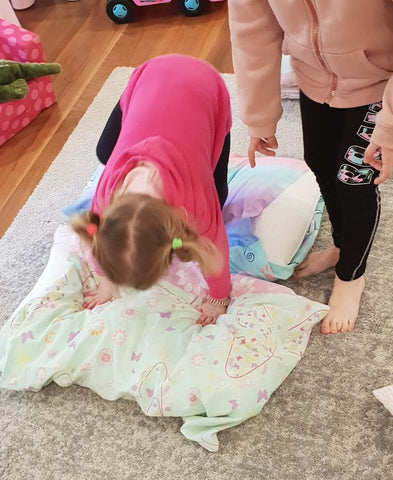
10 Quick Obstacle Course Ideas
These activities can be adapted for both outdoor environments and indoor settings on rainy days:
- Hopscotch Challenge: Use tape on the floor or chalk outside to create a path for hopping and jumping.
- Couch Cushion Course: Arrange cushions or pillows for children to crawl over, jump between, and balance upon.
- Indoor Tunnel Crawl: Use blankets over chairs or large cardboard boxes to create a winding tunnel.
- Balloon Balance: Scatter balloons on the floor, and children must walk through the space without touching or popping them.
- Simple Hurdles: Use empty cardboard boxes or pool noodles as low hurdles to step or jump over.
- Lava Floor: Use rugs or pieces of paper as stepping stones to cross the room without touching the floor.
- Relay Challenges: Create a series of movements like spinning in a circle, crawling under a table, and jumping over a line.
- Indoor Bowling: Use plastic bottles as pins and a soft ball to encourage hand-eye coordination.
- Sofa Bridge: Place a sturdy piece of cardboard between two low stable surfaces to create a bridge for crawling.
- Crawling Maze: Use furniture and toys to create pathways that require children to change direction and level.
For more detailed planning guides and ready-to-print checklists to use in your centre, please visit our printable resources page.